
Supreme Court Preserves Birthright Citizenship Under the 14th Amendment
Supreme Court Preserves Birthright Citizenship
On the last day of its 2025-26 term, the Supreme Court today struck down President Trump’s Executive Order attempting to end birthright citizenship. In a 5-4 decision in Trump v. Barbara, the Court reaffirmed the long-settled legal principle that, outside of rare exceptions, the 14th Amendment confers citizenship on anyone born in the United States. Chief Justice Roberts authored the opinion, joined by Justices Sotomayor, Kagan, Barett, and Jackson.
While legal observers had predicted the Court would rule against the administration, it was a much closer call than most predicted. Justice Kavanaugh agreed with the majority opinion to strike down Trump’s executive order but found no constitutional guarantee of birthright citizenship, only that the Executive Order violated a congressional statute. Justices Thomas, Gorsuch, and Alito dissented.
The Court Reaffirms the 14th Amendment
Writing about the passage of the 14th Amendment, the majority opinion is clear: “A child born on American soil and subject to American law was made an American citizen.” After explaining the history of the Amendment, which had its roots in the common law of England which long had birthright citizenship with only narrow exceptions for children of diplomats and similar situations, Roberts writes:
No such intersovereign concerns apply to children born of parents unlawfully or temporarily present in the United States… They satisfy both elements of the Citizenship Clause: they are “born . . . in the United States” and “subject to the jurisdiction thereof.” Under the Constitution, they are citizens at birth.
The decision settles a legal debate that kicked off on the very first day of Trump’s second term when the president signed Executive Order 14160. The order sought to strip U.S. citizenship from future children of undocumented parents or parents in the U.S. under temporary visas.
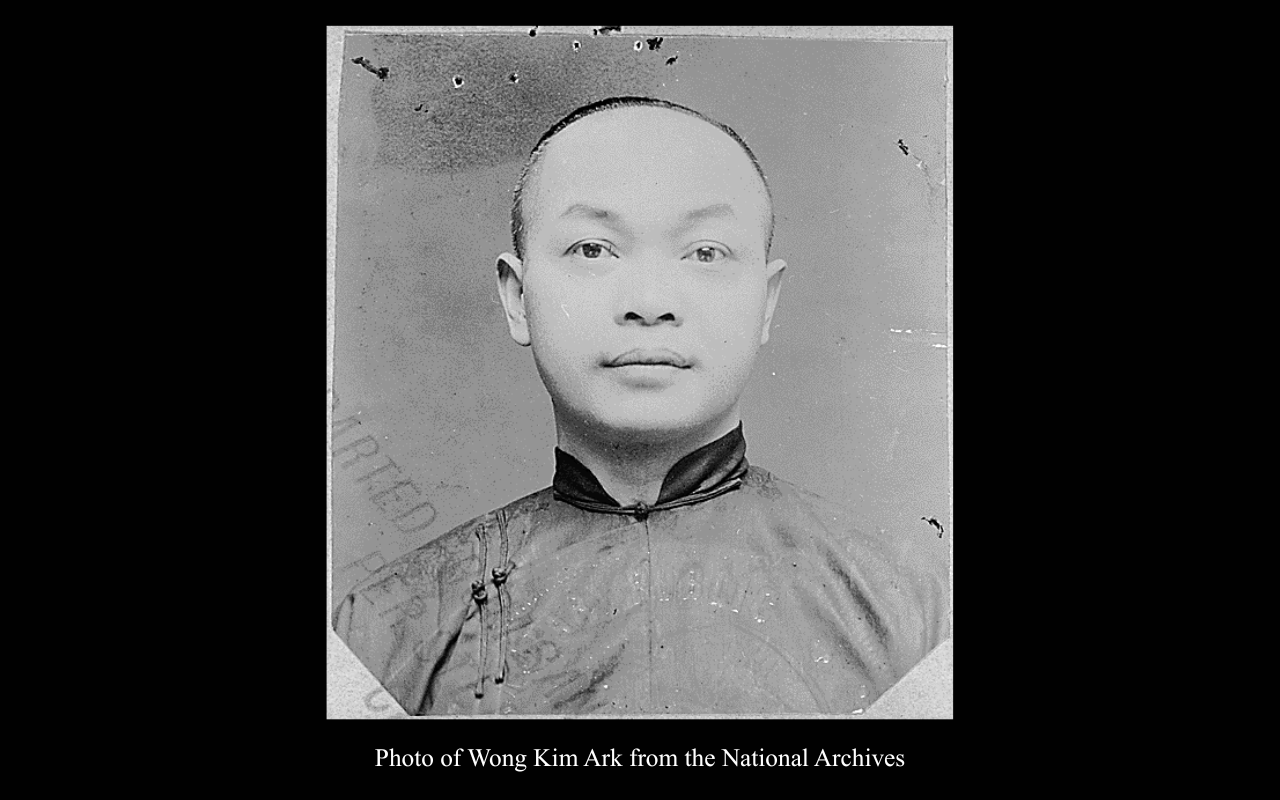
The order would have upended more than a century of legal precedent and caused chaos for millions of families in the US. In today’s decision, the court reaffirmed the Supreme Court’s 1898 decision in U.S. v. Wong Kim Ark, which held that children born in the U.S. are necessarily American citizens.
How the Case Reached the Supreme Court
The American Civil Liberties Union and other organizations immediately filed lawsuits challenging the order as a violation of the 14th Amendment. Several federal judges entered universal injunctions, prohibiting enforcement of the order nationwide.
The Trump Administration appealed these injunctions arguing that individual district court judges should not be able to issue nationwide orders. The Supreme Court largely agreed, ruling in Trump v. CASA, that such universal injunctions likely exceeded the power of the judiciary.
From Executive Order 14160 to Trump v. Barbara
A class action lawsuit followed. In July 2025, U.S. District Court Judge Joseph Laplante, a George W. Bush appointee, certified a class of plaintiffs to include all babies impacted by the Executive Order and entered a new injunction prohibiting enforcement of the order. That case was appealed to the Supreme Court, which in December 2025 agreed to take the case. Oral arguments took place on April 1, 2026.
Solicitor General John Sauer argued the case for the Trump Administration, and President Trump attended the arguments in person, the first time a sitting President has done so. Sauer faced tough questioning from the justices, even from Trump’s appointees on the court.
Cecilia Wang represented the immigrant families. In the end, however, two of Trump’s three appointees agreed with his contention that the 14th amendment does not guarantee citizenship to all born on American soil.
What the Decision Means for Birthright Citizenship
Today, birthright citizenship remains a constitutional guarantee. Though Justice Thomas ominously ends his dissent by musing “I am not sure that today’s opinion will stand the test of time.” So, we should celebrate today, but also recognize how close we came to losing this right.
And celebrate we should. For as Justice Jackson writes in her concurrence, “Thankfully, a majority of the Court… has dutifully preserved the most basic animating principle of our Nation’s founding—that all human beings are created equal—once more.”