
What Mullin v. Doe Means for TPS Holders from El Salvador
What the Supreme Court’s TPS Decision Means
Last month, in Mullin v. Doe, the Supreme Court ruled that the Trump Administration had the power to end temporary protected status (TPS) designations for Haiti and Syria. The Court also found that TPS determinations, unless they raise constitutional issues, are not subject to judicial review.
Filing a successful constitutional claim would appear to be a heavy lift, however, given that a majority of the Court found the respondents’ equal protection claim likely to fail, despite presidential statements calling Haiti a “shithole country” or accusing Haitians of eating pets.
As the Court observed, “the current administration, which has terminated every TPS designation that has come up for renewal, simply opposes the TPS program, at least as it has been implemented in the past.”1 So, it is safe to assume that the TPS program—which has provided sanctuary to more than a million immigrants fleeing war and natural disasters—will soon come to an end, at least in its current form.
What Happens When Temporary Protected Status Ends
The termination of TPS for Haiti and Syria could go into effect as soon as this month, once the district courts that originally stayed the process receive a certified copy of the Supreme Court’s judgment and USCIS issues implementing guidance.
How TPS Termination Affects Haitian and Syrian Nationals
The agency has already announced that work authorizations for Haitian and Syrian TPS holders should be given an expiration date of July 10, 2026. Once their protected status is terminated, TPS holders generally return to the immigration status they had prior to the designation.
For those who were undocumented prior to receiving protection, they will go back to that status and be at risk of removal to their home countries. This is true despite the fact that country conditions in both Syria and Haiti are so dangerous that the U.S. State Department advises Americans not to travel there, because “political violence and violent crimes are common in Haiti” and “no part of Syria is safe from violence.”
Having 6,000 Syrian and 300,000 Haitian TPS holders lose protection will also create negative ripple effects throughout the U.S., particularly in communities where a large number of Haitian immigrants live like Miami and New York and in industries where many work, such as the education, retail, and health care fields.
How TPS Terminations Will Affect the DC Area
Here in the DC area, we are bracing ourselves for the potential termination of TPS for El Salvador, whose TPS designation expires in September.
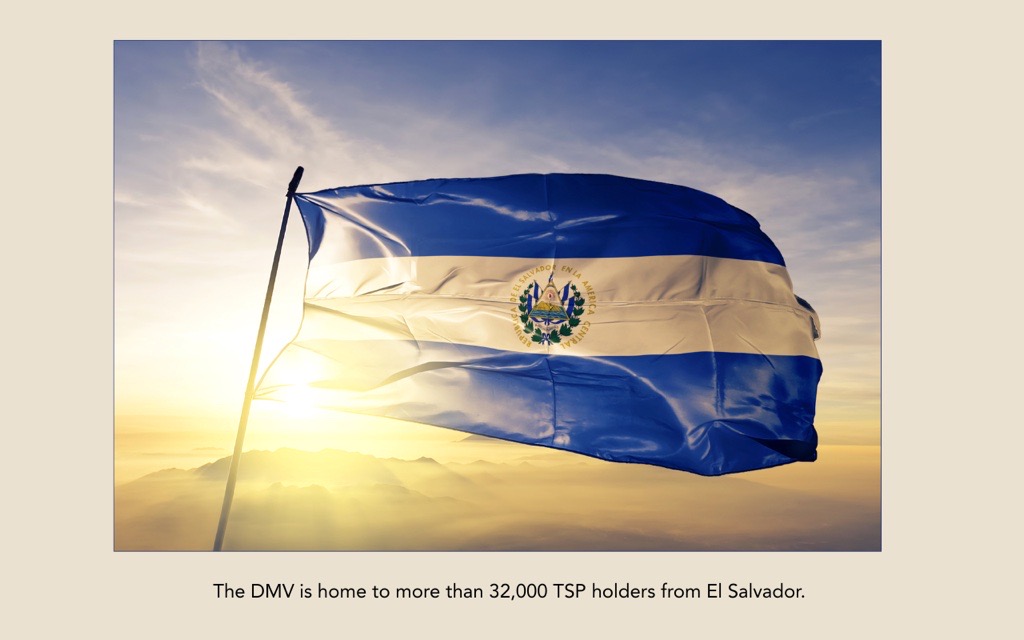
The DMV is home to the largest number of Salvadoran immigrants outside of Los Angeles, and more than 32,000 of them are TPS holders. To be eligible for TPS, a Salvadoran must have been continuously residing in the United States since February 13, 2001, shortly after a series of major earthquakes hit the country.
If TPS for El Salvador is ended, thousands of former TPS holders would be subject to removal to a country where, by definition, they have not lived for more than a quarter of a century.
The Economic Impact of Ending Temporary Protected Status
Like Haitians, Salvadoran immigrants are over-represented in particular industries, including construction, landscaping, and food services. Salvadorans are not only our friends and neighbors, but they cook our food, mow our lawns, and build our homes. A recent report found that TPS holders contribute $29 billion each year to the U.S. economy.
Of course, many TPS holders will not return to El Salvador. They will not abandon their children, many of whom are U.S. citizens, or their homes. They will simply lose their legal status and their work permits. And our restaurant industry—already barely staying afloat since the pandemic—will take another hit.
Another in a long line of people, organizations, and entire industries that have been decimated by this Administration. This includes TPS holders from countries whose TPS designations the Trump Administration terminated already, including Honduras, Nicaragua, and Venezuela.
Immigration Options After Temporary Protected Status
Some immigrants losing TPS status may be eligible to adjust their status, apply for asylum, or qualify for a temporary visa. If you are a TPS holder, we encourage you to contact us today for a consultation.
- Presumably after Justice Alito began writing his opinion, the administration announced that Lebanon’s TPS designation would be automatically extended for six months because “rapidly unfolding events” in the Middle East prevented review of the country’s condition. ↩