
Latest Supreme Court Decisions: Asylum and Temporary Protected Status (TPS)
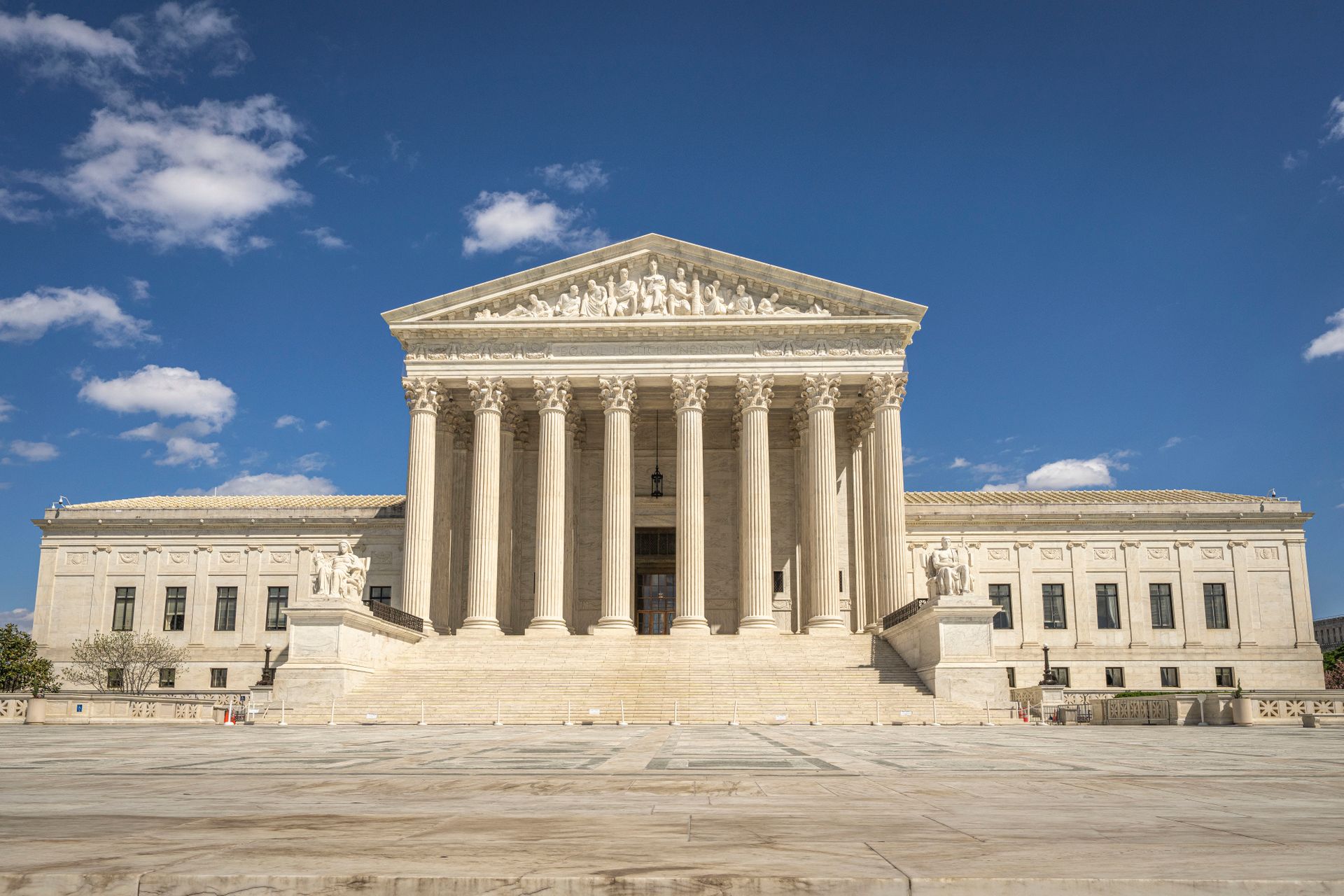
by Georgia King
Supreme Court Rules on Asylum and Temporary Protected Status (TPS)
Yesterday morning, the Supreme Court issued decisions in two immigration cases, Mullin v. Al Otro Lado and Mullin V. Doe, concerning asylum seekers and Temporary Protected Status (TPS) holders, respectively. Both came down 6-3, favoring the Trump administration and raising new barriers for migrants seeking to enter, or remain, in the United States.
Mullin v. Al Otro Lado: Supreme Court Limits Asylum Access at the Border
How the Turnback Policy Reached the Supreme Court
Since 2016, the Trump administration has used the Turnback Policy to deny migrants entry at the U.S.-Mexico border, claiming a lack of capacity to process asylum seekers. In practice, this policy has exposed migrants to coercion, threats, metering (capping daily inspections), and physical force by Customs and Border Patrol in violation of the Fifth Amendment’s Due Process Clause.
Al Otro Lado, a legal services nonprofit, filed a class action lawsuit on behalf of those migrants denied entry to the U.S. under this policy. Between 2021 and 2022, two district courts and a Ninth Circuit panel all declared the policy fundamentally unlawful. However, the government appealed. And today the Supreme Court reversed all prior rulings.
What the Supreme Court’s Decision Means for Asylum Seekers
Historically, reaching a U.S. port of entry qualified as “arriving” in the United States, rendering a migrant eligible for asylum. Today, the Court redefined arrival as physically crossing into the United States. This means that migrants held in Mexico for metering, often for weeks on end, never legally “arrive” in the U.S.
Under this interpretation, the Turnback Policy is neither unlawful nor unconstitutional. In fact, the decision grants CBP a legal basis to further restrict border crossings, limiting the number of migrants who can reach safety when fleeing from persecution.
Mullin v. Doe: Supreme Court Allows TPS Terminations to Proceed
Background on the Temporary Protected Status (TPS) Challenge
In January of 2025, Trump issued Executive Order 14159, aimed at scaling back TPS protections. Then-DHS Secretary Kristi Noem subsequently terminated TPS for Syria, stripping over 6,000 Syrians of their protected status and making them vulnerable to deportation. In response, seven Syrian nationals sued, arguing the TPS termination reflected discrimination rather than a comprehensive review of the unstable conditions in Syria.
A district court agreed and paused the termination. The case was then consolidated with Trump v. Miot, which concerned the challenge of Haitian TPS, before the government appealed.
What the Supreme Court’s Decision Means for TPS Holders
Today, the court ruled that the plaintiffs are not entitled to judicial relief, lifting the block of their TPS terminations. Though the decision is not a final verdict on the legality of such terminations, it is a clear win for the Trump administration, which can now let TPS status lapse even as the case is ongoing.
The Court’s denial of interim relief expands the power of the executive to continue to scale back TPS designations without much judicial oversight, even if cases challenging the justification arise.
What These Supreme Court Decisions Mean for Immigration?
Together, today’s rulings minimize the paths available to migrants seeking to enter or remain in the U.S., while removing constraints on the executive’s power over immigration matters. For asylum seekers and TPS holders alike, the effect of these decisions is the same: the path to safety continues to narrow as the line between policy and lawfulness is increasingly blurred.
These decisions underscore how rapidly the legal landscape is changing and how important it is to have experienced counsel at your side as you navigate the immigration process. Contact us today.