
by Alex Benach
Updated 02-03-2026: On February 2, 2026, a group of immigrant rights organizations filed suit against the Trump Administration in federal court arguing that its freeze on visa processing from 75 countries is based on a false claim that immigrants from those nations that immigrate to the U.S. improperly rely on welfare benefits. We at Benach Pitney Reilly will continue to share updates on this lawsuit.
Overview of the January 2026 Immigrant Visa Processing Suspension
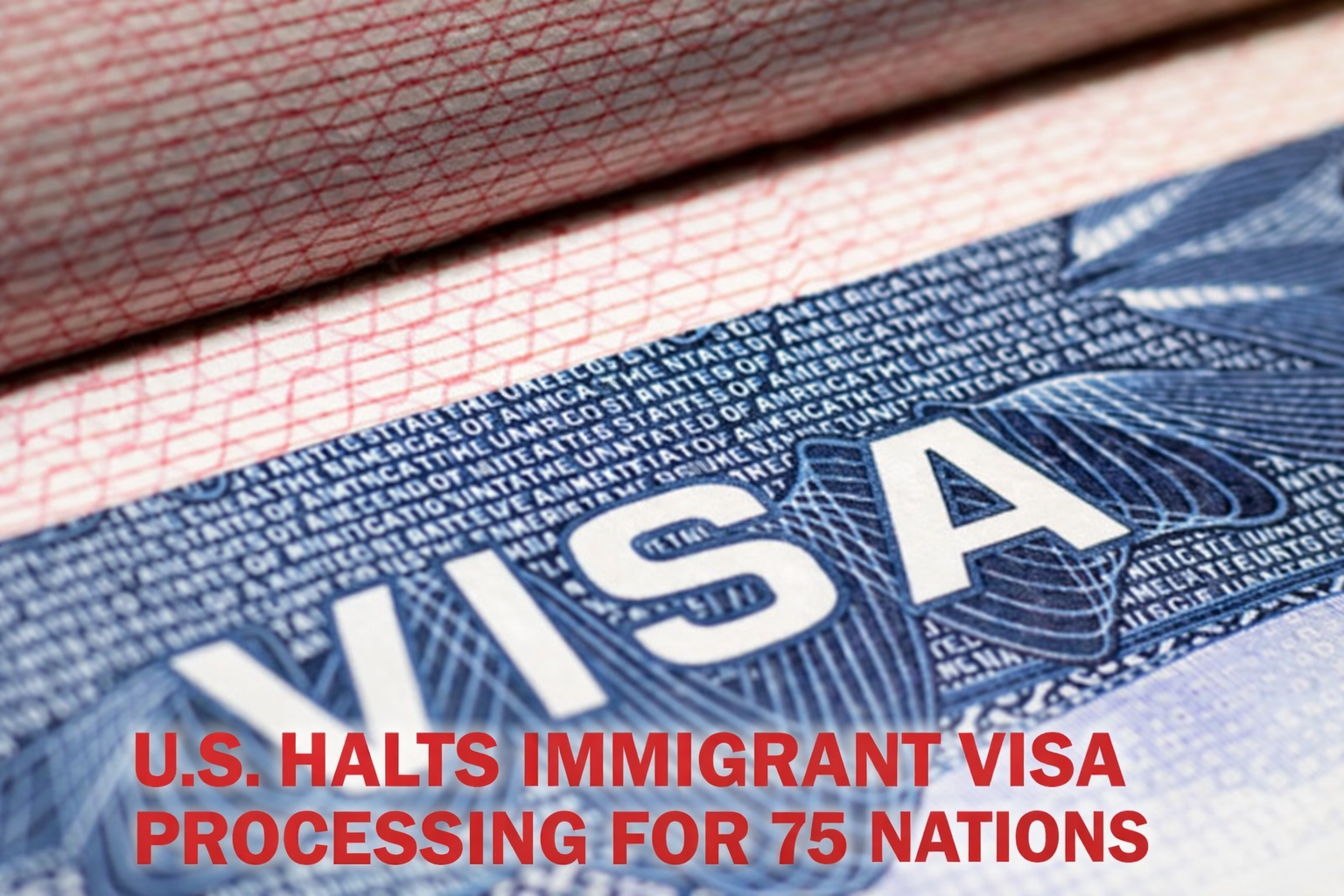
On January 14th, 2026, the Trump administration announced new changes to immigrant visa processing. The new guidance, which will go into effect on January 21st, 2026, halts all immigrant visa processing and issuance for 75 countries. Importantly, this guidance does not apply to tourist, student, or other non-immigrant visas. The announcement came as a shock announcement and since has caused confusion and chaos for many in the immigrant community. This blog post is intended to break down the announcement, report exactly what it means, and what we can expect going forward.
Background on the State Department’s Public Charge Review
This suspension follows State Department guidance from November that directed increased scrutiny regarding the potential for “public charge” of immigrant visa applicants. The notion of public charge refers to targeting individuals who the administration believes will become a strain on public resources, such as government benefits. Previously, the administration had been reviewing applications with heightened scrutiny in order to determine if applicants would become a public charge upon arrival into the U.S. Problematically, these guidelines from November were largely vague and did not include specific information as to what the State Department was screening for. Now, the State Department has directed consular officers in these 75 countries to halt all immigrant visa processing for nationals in those countries.
How the Visa Processing Suspension Will Work in Practice
So, in practice, what will this suspension of visa processing look like? During this suspension, impacted immigrants can still submit immigrant visa applications and attend visa interviews. As well, interviews will continue to be scheduled in the impacted countries. The suspension only means that new visas will not be issued in these countries, as the administration reviews standards for public charge. Dual nationals with a passport from a country not on the list are exempt from this suspension, meaning they are still able to receive new immigrant visas. Further, it is reasonable to expect that applicants for non-immigrant visas (such as tourist visas for events like the World Cup) from these countries will face increased scrutiny on their applications. Expressly, officers will be screening for evidence that non-immigrant travelers will attempt to remain in the U.S. and to seek public benefits upon arrival into the United States.
Relationship to Existing Travel Bans
Many of the countries on this list are already subject to the full or partial travel bans announced by the Trump administration last December, in which both non-immigrant and immigrant visas are not being issued. For those countries, it is unclear how the suspension of visa processing will work in conjunction with the travel bans, as nationals from those countries already faced suspended visa processing.
Duration of the Suspension and Expected Next Steps
It is currently unknown how long this suspension will last. The State Department has announced that this suspension will last for a temporary period of time while they create stricter standards for visa applications, specifically as it relates to public charge. This could mean stricter guidelines for immigrant visa processing if and when the complete suspension is lifted.
Legal Challenges and Broader Immigration Impact
This suspension is likely to face legal pushback and challenges in the courts from pro-immigration advocacy groups. We will be tracking these developments and keeping a close eye on the legal situation as it relates to immigrant visa processing.
Still, there is no doubt that this new announcement is an escalation of hostility towards immigrants, deeming 75 countries as having nationals who would require public assistance in the United States. The Trump administration is using the justification of public charge to curtail immigration into the United States and to expand upon a vision of America that does not include immigrants in any capacity. This development is one in a series of actions that seek to make it exceptionally difficult to successfully, and legally, immigrate to the United States.
Further, this proposal is intended to control the kind of immigration allowed into the United States. The majority of these countries are located in the Global South and are countries that have already been targeted by the Trump administration in their crusade against immigration. The continued attempts by the Trump administration to cut off legal paths for immigration should be viewed as an extension, and expansion, of their brutalization of immigrants here in the United States. It is for this reason that we will continue to fight back against policies like this and continue to seek the best outcomes for our clients.
What to Do Next: How Benach Pitney Reilly Can Help
We at Benach Pitney Reilly are closely monitoring this situation, and will continue to share updates as they come. If you have questions or concerns about how this development impacts your immigration situation, please do not hesitate to reach out to us. For information about scheduling a consultation with us, please email intake@bprimmigration.com or call us at (202) 644-8600.